
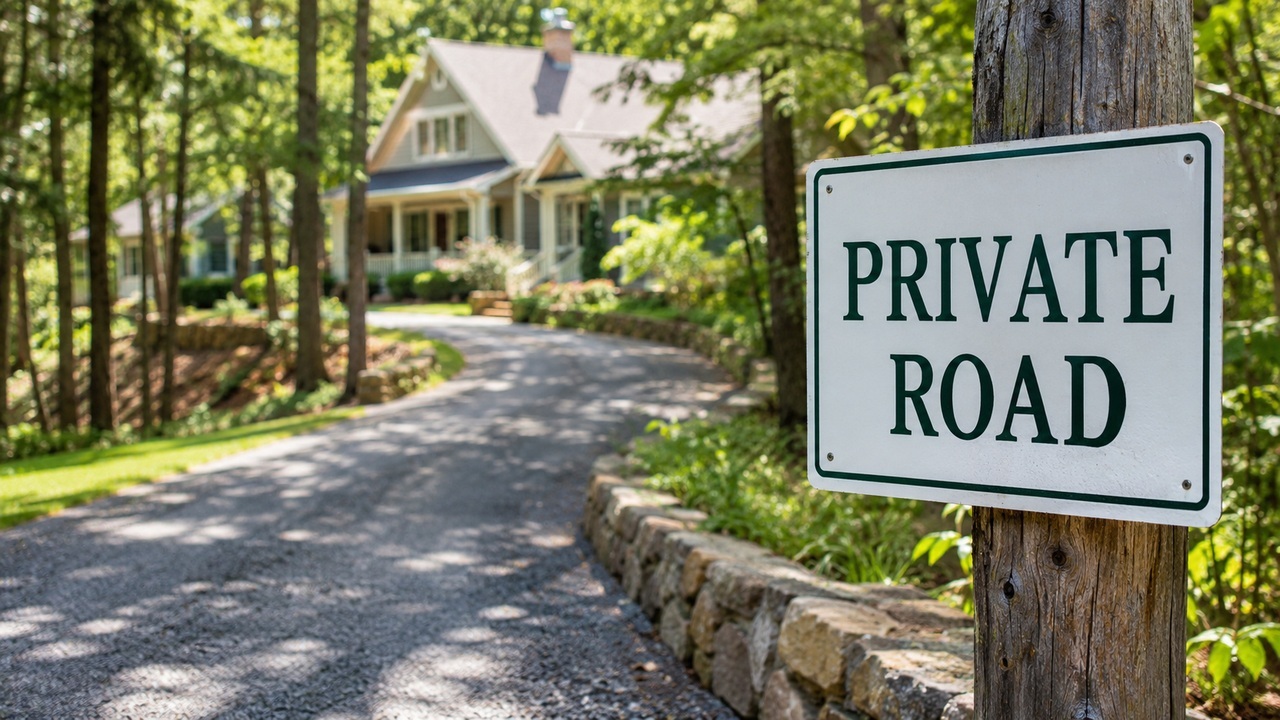
 A house tucked away on a quiet private road can offer extra privacy and less traffic. It can also come with a responsibility that is easy to overlook during a showing: keeping the road usable. When a home relies on a privately maintained road for access, the lender may want to understand who pays for repairs and whether that responsibility is documented.
What Makes a Road Private?
A private road is not necessarily maintained by the city or county. It might serve two homes, an entire subdivision, or a rural property several miles from a paved highway. Residents may share the expense of grading, snow removal, pothole repairs, or drainage work. The arrangement can be informal, but an informal understanding is not always enough for mortgage financing.
Why Lenders Ask About Access
A lender needs reasonable assurance that a property can be reached and that access will continue after the sale. If the only road to a house crosses land owned by someone else, the title review may need to establish a recorded easement or another legally recognized access right. Separately, certain loan programs and lenders may require an acceptable maintenance arrangement for a privately maintained road. Requirements vary by loan type and circumstances, so buyers should ask early rather than assume one rule applies everywhere.
What a Maintenance Agreement May Cover
A written agreement can explain which property owners share costs, how expenses are divided, who arranges work, and what happens if a neighbor refuses to contribute. It may also describe emergency repairs, insurance responsibilities, and how the agreement applies to future owners. Buyers should distinguish between a document that grants access and one that addresses upkeep. They solve different problems, even when both relate to the same road.
Questions to Ask Before Closing
Request the road agreement, easement documents, and any available history of assessments or major repairs. Ask whether the road has flooded, washed out, or required expensive resurfacing. Find out whether a homeowners association handles maintenance or whether individual neighbors coordinate it. A title professional can explain recorded rights, while the lender can identify documents needed for financing. A real estate attorney may be helpful if the terms are unclear.
A private road is not automatically a mortgage obstacle. The important step is understanding the access rights and maintenance obligations before a financing deadline turns a manageable question into a last-minute surprise.
